Vasari Corridor Uffizi - Secret Passage Guide
Discover the Vasari Corridor at the Uffizi Gallery, a hidden passage connecting to Palazzo Pitti. Learn about its history, self-portraits, and architectural marvels.
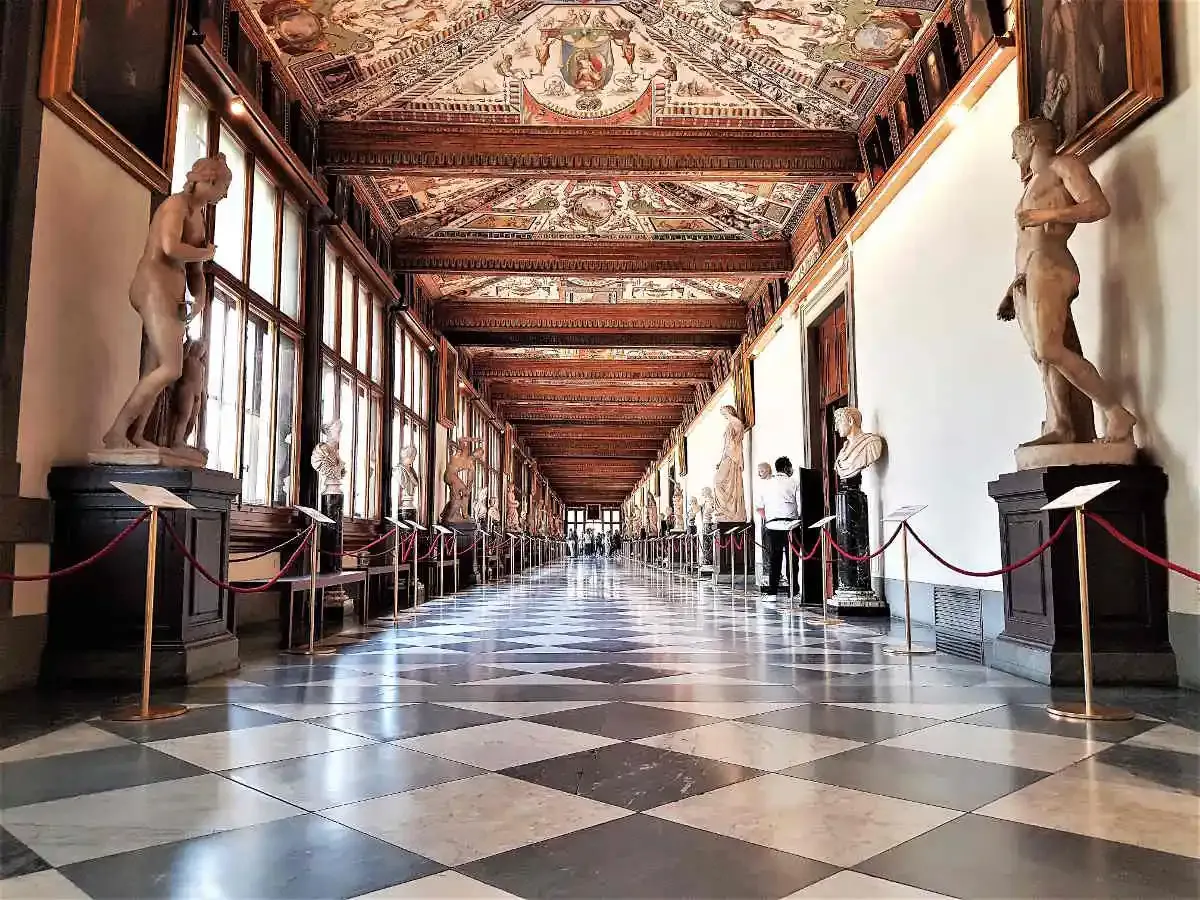
The Vasari Corridor: Secret Passage of the Medici
The Vasari Corridor, built in 1565 by Giorgio Vasari, is a fascinating elevated enclosed passageway that connects the Uffizi Gallery to Palazzo Pitti, crossing the Arno River via the Ponte Vecchio. This architectural marvel served as a private route for the Medici family.
Historical Background
Commissioned by Cosimo I de' Medici for the wedding of his son Francesco to Joanna of Austria, the corridor was completed in just five months. It allowed the Medici to move between their residence and the government offices without mingling with the public.
Architectural Features
The Route
- Length: Approximately 1 kilometer
- Starting point: Uffizi Gallery's second floor
- Path: Through the Ponte Vecchio, along the Oltrarno district
- Endpoint: Palazzo Pitti's Boboli Gardens
Design Elements
- Windows: Over 100 windows offering unique views of Florence
- Structure: Elevated walkway supported by arches and columns
- Materials: Local Florentine stone and brick construction
The Self-Portrait Collection
The corridor houses the world's largest collection of self-portraits, featuring works by:
- Rembrandt: Intimate self-examination
- Velázquez: Royal court painter's perspective
- Chagall: Modern artistic vision
- Vasari himself: The architect's own self-portrait
Visiting Information
Current Status
The Vasari Corridor is currently closed for restoration but is expected to reopen with limited guided tours. Check the official Uffizi website for updates.
When Open
- Tours: Small groups only (maximum 25 people)
- Duration: Approximately 75 minutes
- Advance booking: Essential due to limited capacity
- Special exhibitions: Rotating displays of the self-portrait collection
Engineering Marvel
The corridor's construction required innovative engineering solutions:
- Bridge integration: Seamlessly incorporated into Ponte Vecchio
- Church passage: Special arrangement to pass over Santa Felicita
- Private access: Hidden entrances and exits
- Structural support: Minimal impact on existing buildings
Cultural Significance
The Vasari Corridor represents:
- Political power: The Medici's control over Florence
- Artistic patronage: Support for Renaissance artists
- Urban planning: Integration of private and public spaces
- Historical continuity: Connection between past and present
Conservation Challenges
Maintaining this 16th-century structure presents unique challenges:
- Weather exposure: Protection from rain and humidity
- Structural integrity: Supporting the weight of visitors
- Art preservation: Climate control for the self-portraits
- Modern safety: Meeting contemporary safety standards
The Vasari Corridor stands as a testament to Medici power and Renaissance ingenuity, offering visitors a unique perspective on Florence's history and art.
About the Author

Architecture Historian
Passionate about art and travel, I created this site to help fellow travelers make the most of their visit to the Uffizi Gallery in Florence. With years of experience exploring museums worldwide, I share practical tips and insights to enhance your cultural journey.
Tags
Comments (0)
Loading comments...