Birth of Venus Botticelli - Uffizi Gallery Masterpiece Guide
Complete guide to Botticelli's Birth of Venus at the Uffizi Gallery. Discover symbolism, history, and visiting tips for this Renaissance masterpiece.
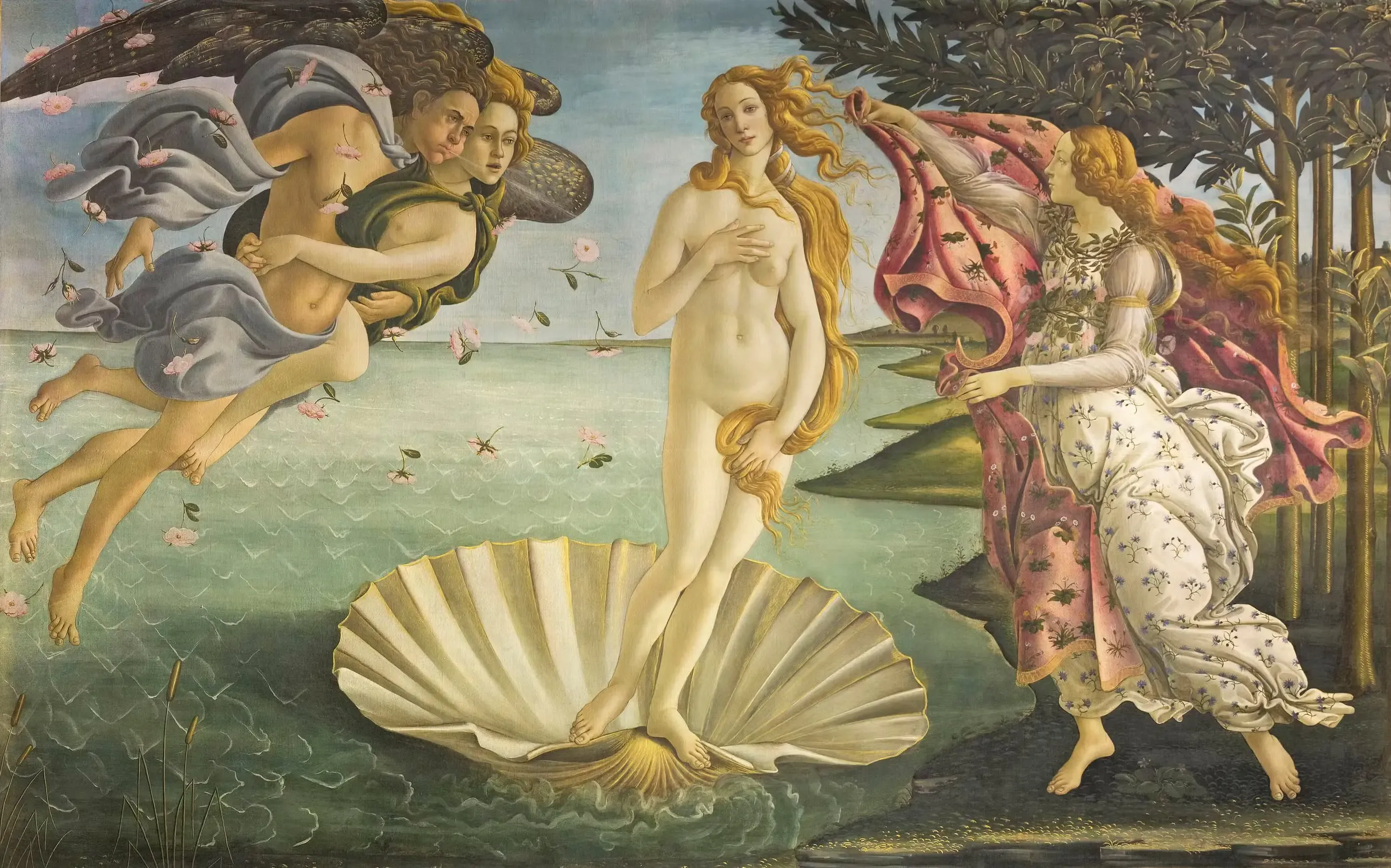
The Birth of Venus by Botticelli: A Renaissance Masterpiece
The Birth of Venus, painted by Sandro Botticelli between 1484-1486, is one of the most recognizable paintings in the world. This masterpiece represents the pinnacle of Renaissance art and continues to captivate visitors at the Uffizi Gallery.
The Story Behind the Painting
The painting depicts the Roman goddess Venus emerging from the sea as a fully grown woman, as described in classical mythology. According to legend, Venus was born from the foam of the sea after Saturn castrated Uranus and threw his genitals into the ocean.
Symbolism and Meaning
Botticelli's Venus represents both sacred and profane love, a concept central to Renaissance Neoplatonism. The painting combines Christian and pagan elements, reflecting the intellectual climate of 15th-century Florence.
Key Symbolic Elements:
- The Shell: Represents the vulva, symbolizing fertility and birth
- The Wind Gods: Zephyrus and Aura, representing the breath of life
- The Orange Trees: Symbols of the Medici family, Botticelli's patrons
- Venus's Pose: Inspired by classical sculptures, representing ideal beauty
Technical Mastery
Botticelli's technique in this painting demonstrates his mastery of:
- Linear perspective: Creating depth and dimension
- Sfumato: Soft, almost imperceptible transitions between colors
- Anatomical precision: Venus's idealized but realistic proportions
- Color harmony: The subtle palette of blues, pinks, and golds
The Medici Connection
The painting was commissioned by Lorenzo di Pierfrancesco de' Medici, cousin of Lorenzo the Magnificent. It originally hung in the Medici villa at Castello, alongside Botticelli's "Primavera."
Visiting Tips
When viewing The Birth of Venus at the Uffizi:
- Best viewing time: Early morning or late afternoon for fewer crowds
- Room location: Currently displayed in Room 10-14 (Botticelli rooms)
- Photography: Flash photography is prohibited
- Audio guide: Highly recommended for detailed explanations
Cultural Impact
The Birth of Venus has influenced countless artists and remains one of the most parodied and referenced artworks in popular culture. From Andy Warhol's pop art interpretations to modern advertising, Venus continues to inspire creativity across all media.
Conservation Efforts
The Uffizi has undertaken extensive conservation work to preserve this masterpiece for future generations. Recent restoration revealed previously hidden details and restored the painting's original luminosity.
Plan your visit to see this Renaissance masterpiece in person and experience the magic that has captivated art lovers for over 500 years.
저자 소개

Dr. Maria Rossi, Art Historian
예술과 여행에 대한 열정을 바탕으로 이 사이트를 만들었습니다. 피렌체 우피치 미술관 방문을 최대한 즐길 수 있도록 실용적인 팁과 인사이트를 공유합니다. 세계 각지의 미술관 탐험 경험을 통해 문화 여행을 더욱 풍부하게 해드립니다.
Tags
Comments (0)
Loading comments...