Michelangelo Doni Tondo Uffizi - Holy Family Panel Painting
Explore Michelangelo's Doni Tondo at the Uffizi Gallery, the artist's only panel painting, depicting the Holy Family in Renaissance style.
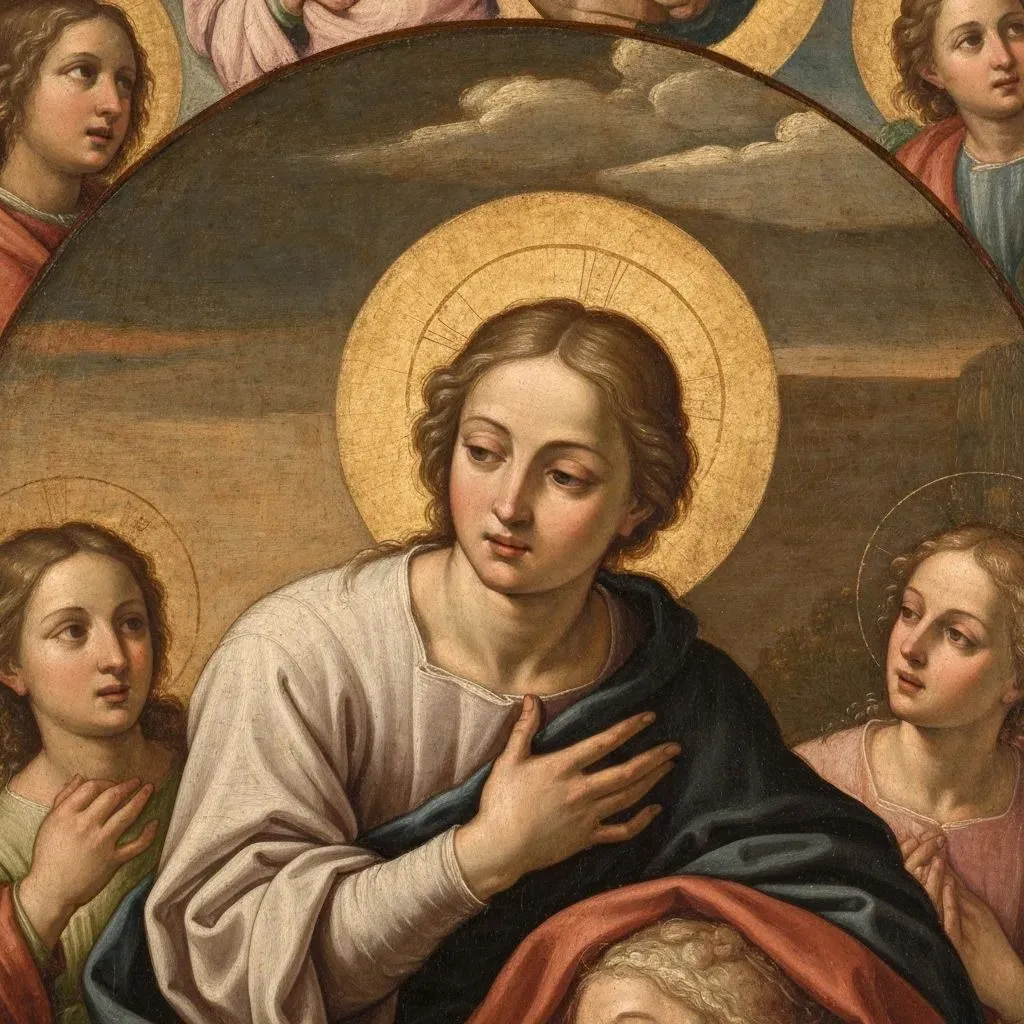
Michelangelo's Doni Tondo: The Only Panel Painting
The Doni Tondo, created around 1506-1508, is Michelangelo's only finished panel painting and represents a unique treasure in the Uffizi Gallery. This circular masterpiece showcases the artist's exceptional skill beyond his famous sculptures and frescoes.
Commission and History
The painting was commissioned by Agnolo Doni, a wealthy Florentine merchant, possibly to celebrate his marriage to Maddalena Strozzi or the birth of their daughter. The work demonstrates Michelangelo's mastery across different artistic mediums.
The Tondo Format
Circular Composition
The circular format, or "tondo," was popular in Renaissance Florence for domestic religious paintings. Michelangelo brilliantly adapted his composition to this challenging format.
Symbolic Meaning
- Circle: Represents perfection and eternity
- Domestic setting: Suitable for private devotion
- Intimate scale: Encourages personal contemplation
Artistic Analysis
The Holy Family
The central figures show:
- Virgin Mary: Turning to receive the Christ Child
- Saint Joseph: Supporting and presenting Jesus
- Christ Child: The focal point of the composition
Revolutionary Technique
Michelangelo employed several innovative techniques:
- Sculptural modeling: Figures appear three-dimensional
- Vibrant colors: Unprecedented use of bright hues
- Dynamic poses: Complex, intertwining movements
- Sfumato: Subtle gradations of light and shadow
The Background Figures
Nude Youths
The background features nude male figures, possibly representing:
- Pagan antiquity: The pre-Christian world
- Natural man: Humanity before Christ's salvation
- Artistic virtuosity: Michelangelo's skill in depicting the human form
Symbolic Interpretation
The composition may represent the transition from paganism to Christianity, with the Holy Family as the bridge between worlds.
The Original Frame
The painting retains its original carved and gilded frame, designed by Michelangelo himself. The frame features:
- Prophets' heads: Five carved heads representing Old Testament prophets
- Decorative elements: Intricate Renaissance ornamentation
- Integrated design: Frame and painting conceived as a unified work
Technical Innovation
Color Palette
Michelangelo's use of color was revolutionary:
- Cangiante: Iridescent color changes
- Bright saturation: Vivid blues, pinks, and yellows
- Metallic effects: Gold highlights and reflections
Brushwork
The painting technique shows:
- Precise detail: Meticulous attention to fabric and flesh
- Smooth finish: Highly polished surface
- No visible brushstrokes: Seamless execution
Influence on Later Art
The Doni Tondo influenced numerous artists:
- Raphael: Adopted similar compositional elements
- Pontormo: Inspired by the color palette
- Bronzino: Influenced by the figure modeling
- Mannerist painters: Adopted the complex poses
Conservation History
The painting has undergone several conservation treatments:
- 1985 restoration: Removed centuries of dirt and varnish
- Scientific analysis: Revealed Michelangelo's painting techniques
- Preventive conservation: Ongoing monitoring and care
Viewing Experience
When visiting the Doni Tondo:
- Location: Room 35 (Michelangelo and Florentine Painting)
- Lighting: Specially designed to minimize reflections
- Viewing distance: Optimal viewing from 2-3 meters
- Details to notice: The intricate frame carvings and color relationships
The Doni Tondo represents Michelangelo's unique contribution to Renaissance painting, combining his sculptural sensibility with masterful use of color and composition.
关于作者

Art History Expert
作为艺术和旅行的爱好者,我创建了这个网站来帮助其他旅行者充分利用他们对佛罗伦萨乌菲兹美术馆的参观。凭借多年探索世界各地博物馆的经验,我分享实用技巧和见解来丰富您的文化之旅。
Tags
Comments (0)
Loading comments...